What BIM is NOT
- It is not only a three-dimensional model.
- It is not a specific software program.
- It is not an isolated collection of files.
- It is not exclusive to the design team.
- It does not end when construction is complete.
Reliable information, coordinated processes and connected models to manage the project and the asset throughout its lifecycle.
Introduction
Building Information Modeling (BIM) is a model-based process that gives owners, designers, builders and operators greater control, efficiency and transparency throughout the project lifecycle.
At ARTCONSULTING, we integrate geometric, technical, economic, schedule, document and operational information within a collaborative environment that helps coordinate disciplines, reduce uncertainty and support decision-making.
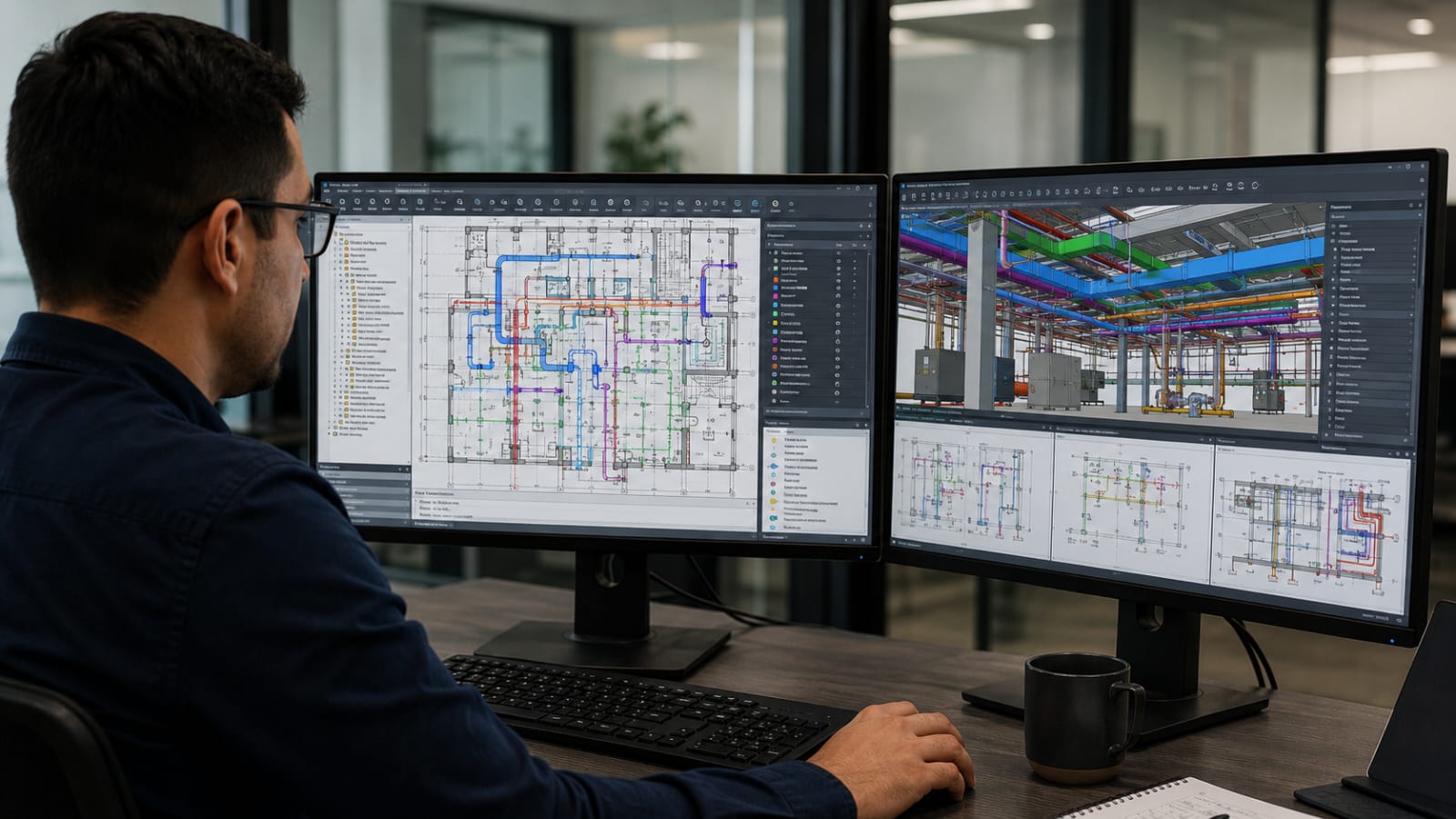
We manage projects with BEXEL Manager, connecting models, quantities, costs, schedules, progress tracking, documentation and analytics within one information ecosystem.
What is Building Information Modeling?
Building Information Modeling is a collaborative methodology for creating, organizing and managing information throughout an asset’s lifecycle.
Under the ISO 19650 series, BIM establishes principles and processes for producing, exchanging, controlling and managing information from strategic planning and design through construction, operation, maintenance and end of life.
BIM dimensions
Each dimension connects the model with new planning, control, performance and operations variables.
What we do
We turn BIM models into a management platform for planning, coordinating, building and operating projects with reliable information.
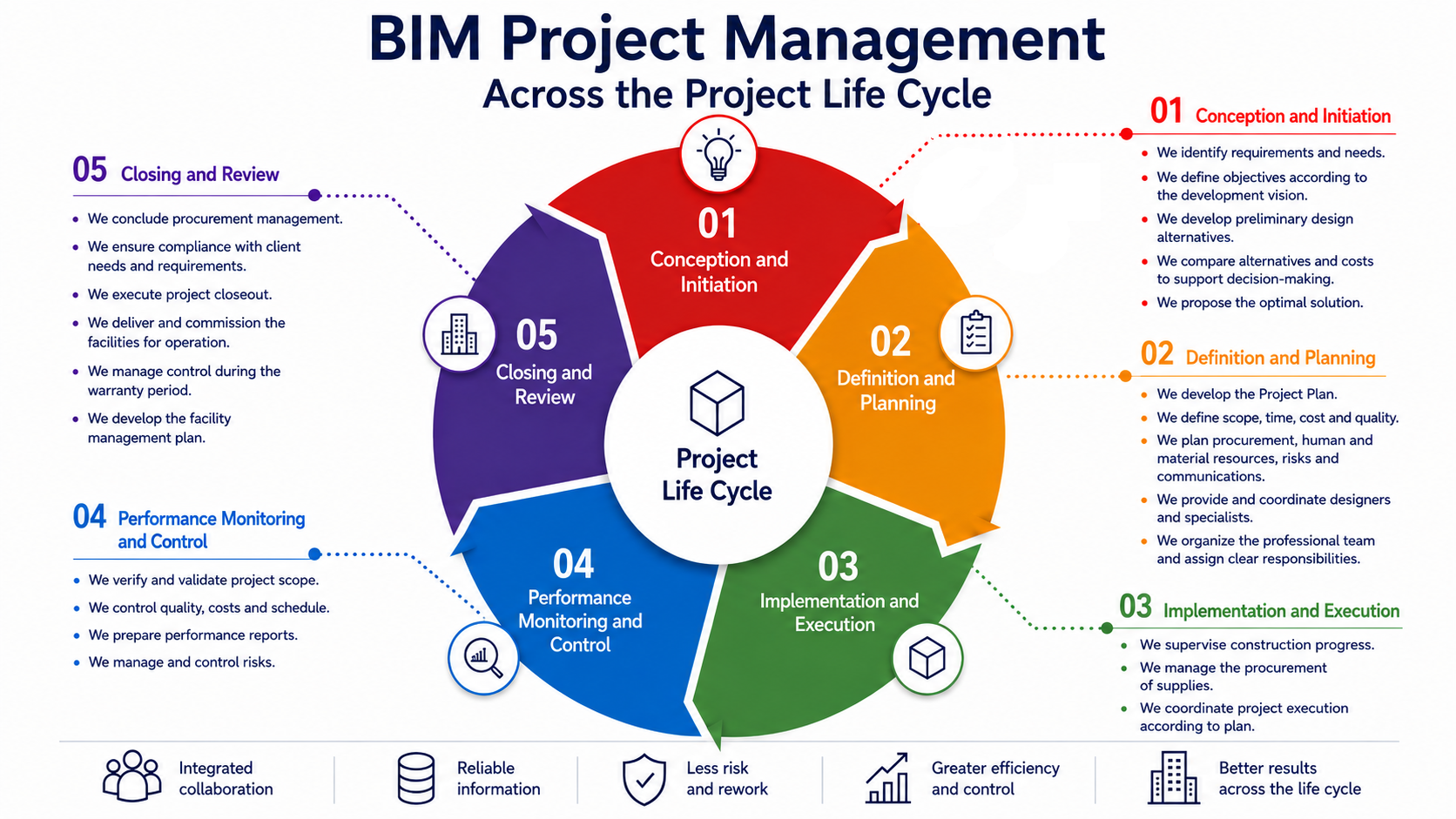
Methodology and BIM workflow
The methodology connects concept, planning, execution, control and closeout within a continuous flow of information, responsibilities and decisions.
Tools and technologies
Integrates models, quantities, costs, schedules, progress and analytics within a BIM management platform.
Centralizes documents, versions, permissions and exchanges to maintain a common source of information.
Benefits
All participants work with structured, coordinated information.
Conflicts are identified before they affect costs and schedules.
Measurements remain linked to the model and its updates.
Construction sequences can be analyzed before and during execution.
Versions, reviews, approvals and issues remain recorded.
Information is prepared for asset management and maintenance.
Sectors
The methodology adapts to different scales, specialties and information requirements.





Next step